
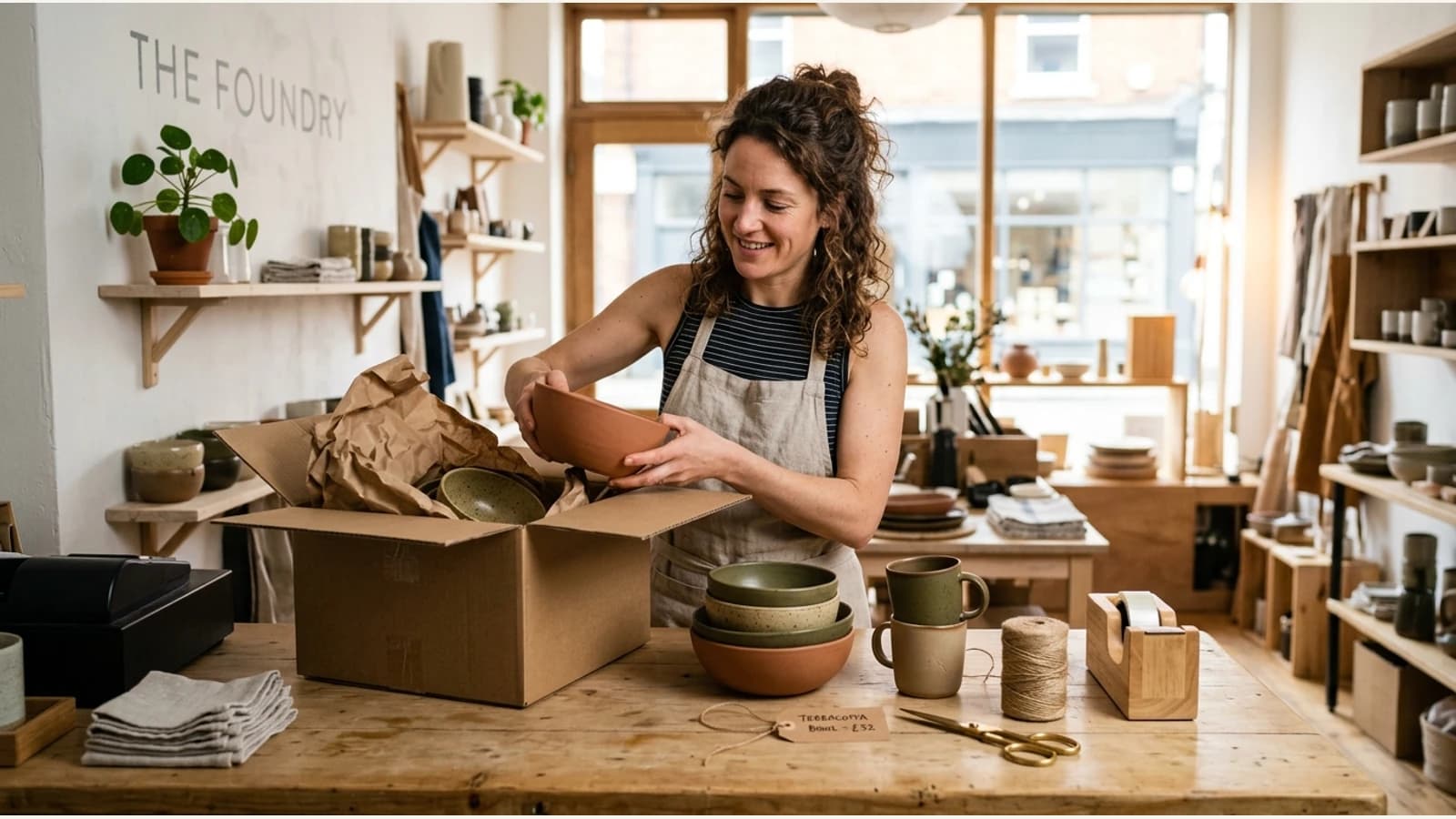
“New stock just arrived” tells people little unless they can see what is new, who it is for, and how to check availability. A useful week of retail posts draws several distinct questions from one delivery: what arrived, how it works, how it compares, what customers ask, and what to do next. The owner checks the actual inventory before each post; a scheduled calendar does not keep a shelf full.
Build from an inventory sheet, not a mood board
This illustrative example uses a small independent homeware shop receiving a new line of ceramic planters. Imagine its verified supplier sheet lists small, medium and large planters; the small pot measures 14 cm across; each has a drainage opening and separate saucer; the available finishes are clay and deep blue; and the shop offers pickup, not shipping. Those are example facts, not claims about a real product. Before writing, the owner checks the actual names, dimensions, prices, colours, quantity on hand and fulfilment route. The team takes real photos of each size in the actual shop. A post should not call a planter “handmade locally” or “weatherproof” unless the product information supports it.
Ask which details will help someone decide. A customer may want to know whether a pot has drainage, what size fits a shelf, or whether the displayed plant is included. Those answers are more useful than five variations of “We are obsessed.”
Five complete posts, each answering a different question
These are fictional post packages for one illustrative launch week in March 2027. The shop would supply five different approved square images and verify stock immediately before each scheduled time. Each caption names a useful customer decision; none assumes Mazuly can synchronise live inventory. Dates and posting times are examples, not an algorithm for reach.
Post 1 — What arrived? Monday 1 March, Instagram, 10:30 a.m. local. Photograph the three actual sizes together in the shop, with enough clear space for the on-image line “New ceramic planters.” Caption: “Three ceramic planter sizes have arrived in clay and deep blue. Each comes with a drainage opening and separate saucer. See them in the shop, or ask us to check the size and finish you want before travelling.” Hashtags: #CeramicPlanters #LocalHomeware if those accurately describe the shop. Next step: visit or use its real enquiry route; the owner confirms current stock before posting.
Post 2 — Will the small one fit? Tuesday 2 March, Facebook, 12:15 p.m. local. Show the small planter beside a ruler or a familiar book; the scale object must not hide the product. On-image line: “The 14 cm shelf-size planter.” Caption: “Looking for a planter for a smaller shelf? The small ceramic planter in this photo measures 14 cm across. It includes a drainage opening and separate saucer. Ask our team to check the current finish and price before you visit.” Hashtags: #SmallSpacePlants #LocalHomeware, if relevant. Next step: ask about the actual small model; remove the dimension if the supplier sheet or measured item disagrees.
Post 3 — What is underneath? Thursday 4 March, Instagram, 1:00 p.m. local. Use a close-up of the base and saucer of the same model named in the caption. On-image line: “See the drainage detail.” Caption: “A useful planter detail is easy to miss in a shelf photo. This ceramic planter has a drainage opening and a separate saucer, both visible here. Ask us which sizes and finishes are available today, and check the dimensions before choosing.” Hashtags: #CeramicPlanter #PlantDisplay. Next step: enquire about the photographed model. Do not add plant-care or weatherproofing promises that the product information does not support.
Post 4 — Which finish is here now? Saturday 6 March, Facebook, 10:00 a.m. local. Take a new same-day photo of the clay and deep-blue planters actually on the shelf. On-image line: “Today's planter finishes.” Caption: “Clay and deep-blue ceramic planters are on the shelf in this morning's photo. Sizes and quantities can change during the day, so message or call us to check the finish you want before making a special trip. We can confirm the current price and pickup details.” Hashtags: #HomewareShop #CeramicPlanters, if accurate. Next step: request a current stock check. If one finish sells out before posting, change the image and copy or hold this post.
Post 5 — How do I get one? Sunday 7 March, Instagram, 3:00 p.m. local. Photograph the real entrance and pickup counter, without unrelated stock or customers in the frame. On-image line: “See the planters in person.” Caption: “Want to compare the sizes before choosing? Visit our homeware shop and ask to see the ceramic planters. Ask us to confirm the size and finish you need, then arrange shop pickup. Check today's opening hours before you travel.” Hashtags: #ShopLocalHomeware #CeramicPlanters, if true. Next step: use the verified location and contact route; do not publish this on a day the real shop is closed.
The on-image lines, captions, hashtags, channels, times and actions are separate pieces. They become usable only after the owner replaces the fictional facts with the real supplier sheet, price and stock, and supplies the five actual product photos. If a model lacks drainage, the third post must say so rather than quietly skipping the question.
Keep the schedule subordinate to real stock
The team should name who rechecks the product before a scheduled post. A simple field beside each calendar item—“stock confirmed by / checked at”—can prevent an attractive but misleading announcement. Update a social post that says “available now” when that changes, and direct customers to a live inventory source if one exists. Do not imply Mazuly automatically synchronises a retailer's stock unless that connection is actually supported.
Mazuly's Social Planner can lay out post images, names, channels and planned times in one month. Photo Studio can prepare a real shelf photo for a social post. The owner still supplies and verifies the changing inventory; a calendar should change when the business changes. The lasting value is a week of clear customer answers, not a week's worth of filler.